
The summer transfer window always creates noise around Manchester United, but every now and then, a rumour emerges that actually makes football sense.
And right now, the growing links between United and Mateus Fernandes feel very different from the usual headline-chasing speculation.
Reports over the last few days suggest negotiations could accelerate following West Ham United’s relegation from the Premier League, with the player reportedly open to the move and United eager to complete business early in the transfer window.
On the surface, it sounds like another standard transfer story.
But when you look deeper, this potential deal may actually tell us a lot about what INEOS are trying to build at Old Trafford.
Because Mateus Fernandes is not just another expensive name linked to Manchester United. He represents something far more important: profile-based recruitment, long-term planning, athletic midfield rebuilding, and a possible shift away from the chaotic transfer strategy that has damaged the club for years.
And perhaps most interestingly of all, this move feels believable.
Why Mateus Fernandes Has Suddenly Become One of Europe’s Most Watched Midfielders
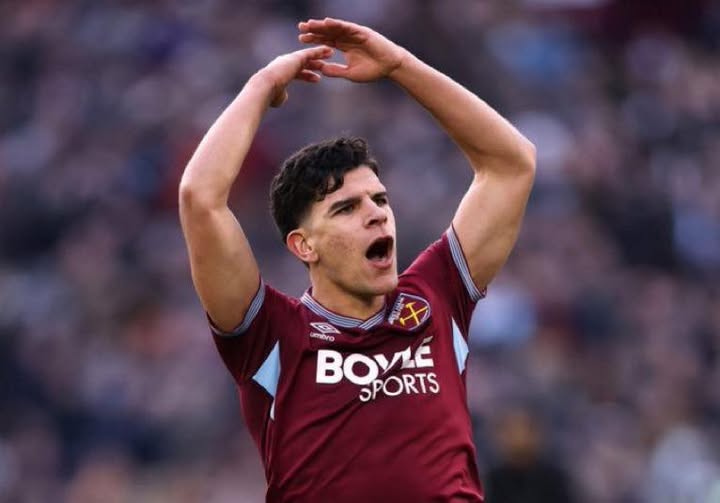
It’s easy to forget how quickly Fernandes’ rise has happened.
Just a short time ago, he was viewed as a promising but relatively raw Portuguese midfielder trying to establish himself at senior level. Now, after impressive spells in difficult situations, he is increasingly being discussed as one of the Premier League’s most complete young midfield profiles.
Even in struggling teams, certain players stand out immediately.
Fernandes has been one of those players.
Reports from multiple outlets claim United have intensified their scouting of the midfielder in recent months, especially as West Ham’s relegation battle worsened throughout the season.
And honestly, it is not hard to understand why.
Modern elite football increasingly revolves around midfielders who can do everything:
- progress the ball under pressure,
- cover ground aggressively,
- press intelligently,
- retain possession in transitions,
- and carry athletic intensity for 90 minutes.
Fernandes appears to tick almost every one of those boxes.
At only 21 years old, he already looks physically mature enough for Premier League football while still possessing the technical calm associated with Portuguese midfielders. That combination is extremely valuable in today’s market.
When you watch him closely, several qualities immediately stand out:
Ball Carrying
Fernandes is not simply a passer. He drives forward aggressively with the ball and breaks midfield lines consistently. That matters enormously in transition-heavy football.
United have lacked midfielders capable of carrying possession through pressure for years.
Athleticism
This may be the most underrated aspect of his game.
Manchester United’s midfield has often looked physically overwhelmed in big games over the last few seasons. Fernandes brings mobility, intensity, recovery speed, and pressing energy that the squad desperately needs.
Press Resistance
One of the biggest reasons elite clubs value modern midfielders so highly is their ability to survive under pressure.
Fernandes rarely panics.
Even in chaotic matches, he looks composed receiving possession in difficult areas, which immediately raises his ceiling as a potential top-level midfielder.
Tactical Flexibility
He is not limited to one specific role.
Fernandes can operate:
- as a deeper midfielder,
- in a double pivot,
- as a box-to-box profile,
- or even slightly advanced depending on system requirements.
That versatility becomes incredibly useful for managers trying to build dynamic systems.
Why West Ham’s Relegation Changes Everything
The biggest reason this rumour suddenly feels serious is simple:
Relegation changes football economics completely.
According to recent reports, West Ham are facing major financial pressure following relegation, with concerns surrounding wage structures, unpaid transfer obligations, and the massive revenue drop that comes with leaving the Premier League.
That reality matters.
Because clubs rarely want to sell their best young players.
But relegated clubs often lose the power to control situations entirely.
Mateus Fernandes was already attracting interest before relegation became official. Now, the pressure on West Ham could significantly accelerate negotiations across the market.
Several reports suggest United believe this creates an opportunity to move early before wider bidding wars fully develop.
And strategically, that would make perfect sense.
For years, Manchester United have approached transfer windows reactively instead of proactively.
Targets dragged on for months.
Negotiations became public spectacles.
Prices inflated.
Alternative plans disappeared.
Deadlines created panic.
The club repeatedly entered windows without clarity or urgency.
But the messaging around this Fernandes situation feels different.
There is increasing talk that INEOS want business completed early so pre-season preparation becomes more stable and tactical integration happens faster.
That may sound basic, but it represents a huge cultural shift compared to the dysfunction supporters became used to under previous structures.
The Most Important Part of This Rumour: It Fits United’s Actual Needs
One reason fans often become frustrated with transfer rumours is because many links feel disconnected from the squad’s real problems.
This one does not.
Manchester United genuinely need midfield reconstruction.
And not cosmetic reconstruction either.
Real reconstruction.
Even with strong individual performers in the squad, there are major long-term questions surrounding balance, athleticism, control, and age profile in midfield.
Casemiro’s Situation
Casemiro brought experience, leadership, and elite mentality when he arrived.
But football moves quickly.
The physical demands of Premier League midfield play are relentless, and United increasingly need younger, more mobile profiles capable of sustaining high-intensity football over multiple seasons.
Bruno Fernandes Cannot Carry Everything Forever
Bruno Fernandes remains one of United’s most important players.
But too much creative responsibility still falls on him.
When United struggle in midfield, Bruno often has to compensate by dropping deeper, covering larger spaces, and forcing progression himself.
That imbalance hurts the entire structure.
A player like Mateus Fernandes could help redistribute workload and improve overall midfield functionality.
The Athletic Gap
This might be the single biggest issue.
Against top sides, United have too often looked second-best physically in midfield transitions.
Elite modern teams dominate space through mobility and intensity.
Fernandes directly addresses that weakness.
Why INEOS Might View Mateus Fernandes as the “Ideal Modern Signing”
One thing becoming increasingly obvious under INEOS is the desire to lower the average age profile of the squad while targeting players entering developmental peaks rather than established decline phases.
Mateus Fernandes fits that philosophy perfectly.
Instead of:
- paying enormous wages,
- signing ageing stars,
- or chasing commercial headlines,
United appear more interested in acquiring players who can improve significantly over the next 4–6 years.
That is how elite clubs build sustainable success.
Look at the best recruitment models in Europe:
- Manchester City,
- Arsenal,
- Liverpool FC,
- Real Madrid.
Most successful modern rebuilds focus on players aged roughly 20–24 who can grow with the team structure.
Mateus Fernandes falls directly into that category.
And crucially, he already understands Premier League football.
That matters more than people realise.
United have repeatedly signed players requiring major adaptation periods:
- tactical adaptation,
- physical adaptation,
- cultural adaptation,
- league adaptation.
Fernandes has already experienced the intensity of English football in difficult circumstances.
That lowers risk significantly.
But There Are Still Big Questions Around the Deal
As exciting as the rumours may sound, there are still major uncertainties.
And United supporters should remain cautious.
Because football transfer rumours become exaggerated very quickly — especially online.
Several reports disagree on potential valuation figures, with estimates ranging anywhere between £50m and £100m depending on the source and West Ham’s negotiating position.
That difference matters enormously.
At around £50m–£60m, many supporters would probably view Fernandes as smart business.
At £100m+, the conversation changes completely.
That level of spending creates enormous pressure and naturally raises questions about opportunity cost.
Would United be better spreading resources across:
- midfield,
- striker depth,
- left wing,
- and defence?
Possibly.
And there is another important point here:
A talented young midfielder alone will not suddenly fix Manchester United.
For years, supporters have fallen into the trap of believing one signing can transform structural problems overnight.
Football rarely works that way.
Even elite players need:
- tactical stability,
- coherent coaching,
- balanced teammates,
- and functional systems.
If United’s broader football structure does not improve, even top signings can struggle.
Why Manchester City’s Interest Should Worry Everyone
One detail repeatedly appearing in transfer discussions is reported interest from Manchester City.
And honestly, that should get attention.
Because City rarely pursue midfielders without strong tactical reasoning.
Under Pep Guardiola, City’s recruitment has consistently targeted technically intelligent, positionally flexible, press-resistant players.
Fernandes fits that model almost perfectly.
That creates both opportunity and danger for United.
Opportunity because competing for players with elite tactical profiles signals smarter scouting direction.
Danger because City’s development environment remains significantly more stable and attractive than United’s.
If both clubs genuinely want the player, United may ultimately need to convince Fernandes that Old Trafford represents the better long-term project.
That is not automatically easy anymore.
For years, United could rely purely on historical status.
Modern players increasingly care about:
- tactical clarity,
- sporting direction,
- developmental pathways,
- and project credibility.
INEOS understand that.
Which is probably why they appear desperate to show early signs of structural competence this summer.
The Timing of the Deal Could Be Extremely Important
One of the most interesting aspects of these rumours is the repeated suggestion that United want the deal completed early.
That should not be ignored.
Elite clubs increasingly prioritise early-window business because it improves:
- tactical preparation,
- squad integration,
- pre-season chemistry,
- and managerial planning.
United have consistently failed in this area.
Too many summers became exhausting sagas that dragged into August while rivals completed business calmly and efficiently.
If Fernandes becomes an early signing, it may signal a serious operational change behind the scenes.
And supporters would welcome that enormously.
Because recruitment quality is not just about identifying players.
It is also about timing, negotiation efficiency, and strategic planning.
Could Fernandes Become the Face of United’s New Midfield Era?
Potentially, yes.
But expectations would need managing carefully.
One of the biggest problems at Manchester United over the last decade has been unrealistic pressure placed on new signings immediately after arrival.
Every transfer becomes:
- “the saviour,”
- “the missing piece,”
- or “the player who fixes everything.”
That environment can become toxic quickly.
Mateus Fernandes should instead be viewed as part of a broader rebuild.
Not the rebuild itself.
If United surround him with:
- tactical structure,
- athletic support,
- intelligent coaching,
- and functional recruitment,
then his ceiling becomes extremely exciting.
Because the raw ingredients are clearly there.
At 21 years old, possessing Premier League experience, technical quality, athletic intensity, and positional versatility, Fernandes looks exactly like the type of midfielder elite clubs now prioritise.
The Bigger Story Here Isn’t Just the Player — It’s the Strategy
Ultimately, this rumour matters because it may reveal whether Manchester United are genuinely evolving as a football institution.
For years, recruitment at the club often felt disconnected from logic:
- ageing stars,
- commercial signings,
- emotional purchases,
- reactive spending,
- and inflated negotiations.
Now there are signs of something different.
Targeting:
- younger profiles,
- high-ceiling players,
- athletic midfielders,
- and sustainable squad building.
That is the real story here.
Whether Fernandes joins or not, the type of player United are now being linked with feels far more aligned with modern elite football.
And supporters have been waiting a very long time for that.
Final Thoughts
At this stage, it is still important to remember these remain transfer rumours rather than confirmed developments.
But unlike many transfer stories surrounding Manchester United, this one actually makes football sense from almost every angle.
- The player profile fits.
- The age profile fits.
- The tactical need fits.
- The market opportunity fits.
- The financial circumstances fit.
- The rebuild narrative fits.
And perhaps most importantly, the move feels proactive rather than desperate.
That alone would represent major progress for Manchester United.
If the reports are accurate, the coming weeks could become very important.
Because signing Mateus Fernandes would not just be about acquiring a talented midfielder.
It could become one of the clearest signs yet that Manchester United are finally trying to build intelligently again.